 12 Jan 2026
A tradition of maritime diplomacy set for historic 2026 edition
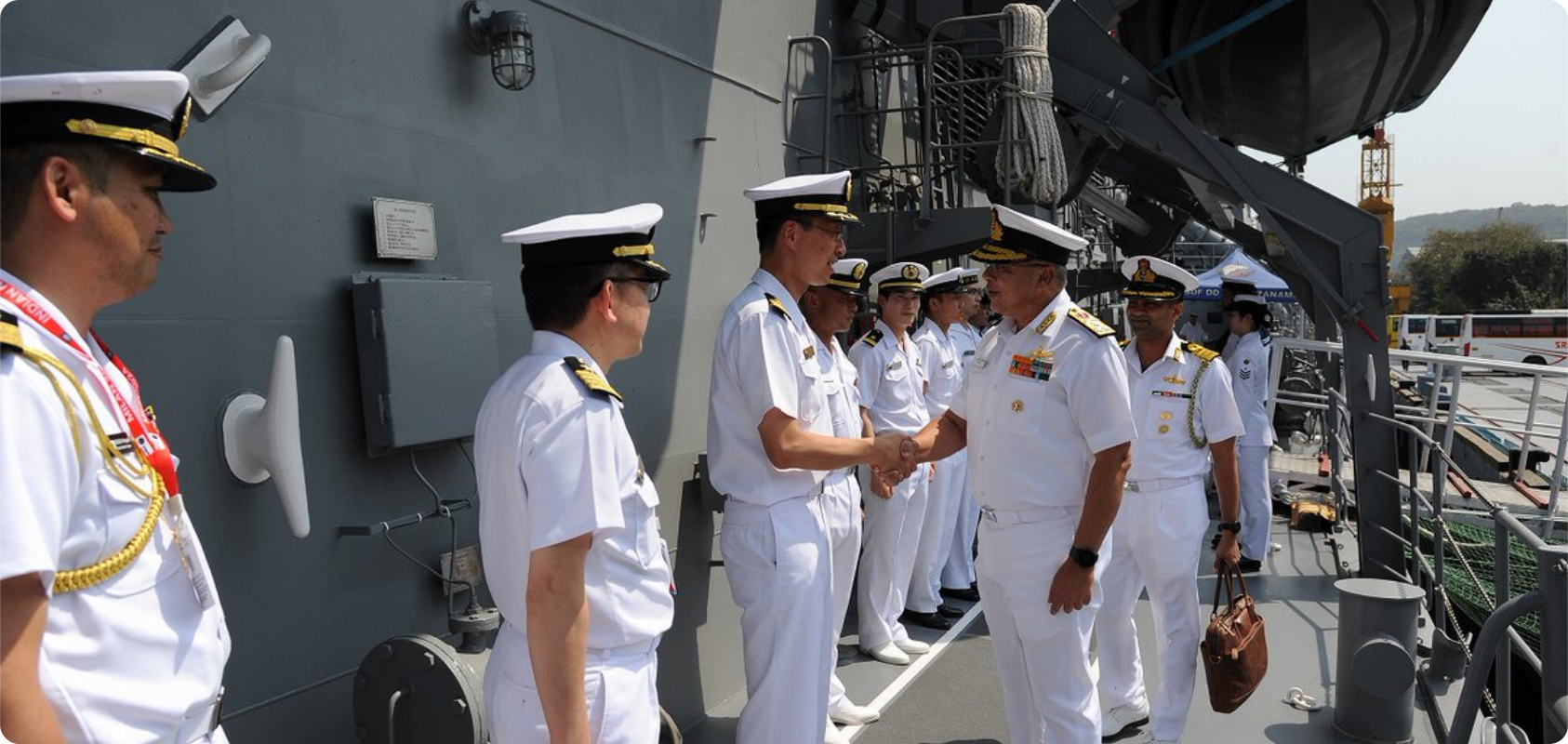
Visakhapatnam, on India's eastern coast, is preparing to host one of the largest maritime gatherings in the nation's history: the International Fleet Review (IFR) 2026, scheduled from 15 to 25 February.
The event, coinciding with Exercise MILAN 2026 and the Indian Ocean Naval Symposium (IONS) Conclave of Chiefs, will bring together warships, delegations, and naval leaders from dozens of countries. It underscores India's evolving role as a key player in Indo-Pacific maritime cooperation.
India's fleet review tradition dates back to humble beginnings. The first Presidential Fleet Review (PFR) occurred in 1953, when President Rajendra Prasad inspected 33 ships in Bombay (now Mumbai) harbour, a symbolic moment as Indian sailors saluted an Indian head of state under the tricolour for the first time post-Independence.
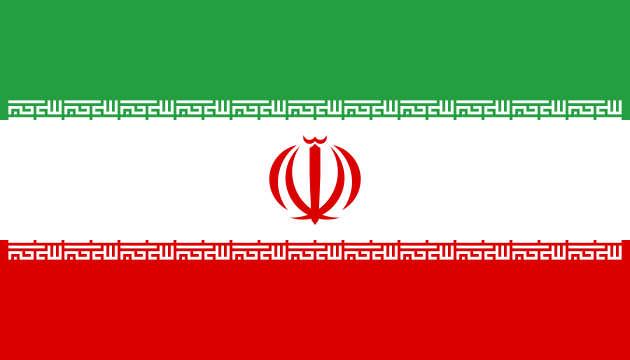
Subsequent reviews marked the Navy's growth. In 1956, a special review honoured the Shah of Iran during his state visit, an early example of maritime diplomacy. The 1960s showcased INS Vikrant, India's first aircraft carrier, while later decades highlighted indigenous builds like the Leander-class (Nilgiri) and Godavari-class frigates, each vessel a testament to growing self-reliance.
The shift to international participation came in 2001, when India hosted its inaugural IFR in Mumbai under the theme "Bridges of Friendship". Despite the recent Gujarat earthquake, President K.R. Narayanan reviewed 97 ships, 73 Indian and 24 foreign, from 20 nations. It projected India as an emerging partner on the global stage.
Fifteen years later, in 2016, the focus moved east to Visakhapatnam. Nearly 100 ships from 50 countries assembled in the Bay of Bengal, the largest such gathering in Indian waters. President Pranab Mukherjee, Prime Minister Narendra Modi, and Defence Minister Manohar Parrikar reviewed the fleet from INS Sumitra.
Beyond spectacle, these reviews serve as floating summits of diplomacy. Ships sailing in unison symbolise shared commitment to secure seas, humanitarian aid, and freedom of navigation, distinct from more ostentatious displays elsewhere.
They also connect the Navy to citizens. In 2016, Visakhapatnam transformed into a festival: parades, cultural events, and illuminated ships drew families to the waterfront, fostering affection for the sea and those who guard it.
The 2026 edition promises even greater scale, featuring indigenous platforms like INS Vikrant (India's first domestically built carrier), Visakhapatnam-class destroyers, Nilgiri-class stealth frigates, and Arnala-class corvettes. President Droupadi Murmu will conduct the review on 18 February off RK Beach, followed by an International City Parade.
Linked to Prime Minister Modi's MAHASAGAR vision, an extension of SAGAR, and policies like Act East and the Indo-Pacific Oceans Initiative, the convergence highlights India's inclusive approach. Exercise MILAN, which began modestly in 1995 with four navies in Port Blair and now draws nearly 50, will operationalise ties through joint drills.

 Chat with Navika
 India
India  Thailand
  France
  Iran
Iran  Bangladesh
  Australia
  South Africa
  United Arab Emirates